• Bala Lau Challenges Nigerian Leaders to Serve with Integrity, Address Insecurity

The National Chairman of Jama
  • Gen. Yakubu Gowon Says Two Christian Friends in Plateau Betrayed Him in New Memoir

Former Nigerian Head of State, General Yakubu Gowon (Rtd.), has revealed that two of his Christian friends from Plateau State betrayed him, saying the experience remains one of the painful memories of his life.

Gowon made the revelation in his newly launched memoir, My Life of Duty, unveiled in Abuja during a ceremony attended by prominent national figures, including Vice President Kashim Shettima, Emir of Kano Muhammadu Sanusi II, former President Goodluck Ebele Jonathan, former First Lady Aisha Buhari, former Heads of State, senior military officers, diplomats, and other distinguished guests.

In the book, the former Head of State recalled that two of his Christian friends in Plateau State abandoned and betrayed him, noting that the incident left a lasting emotional impact.

According to Gowon, despite the passage of time, he still feels the pain of what he described as their betrayal.

The elder statesman explained that one of the major reasons for writing My Life of Duty was to correct what he described as longstanding misconceptions and inaccurate interpretations about his life, his leadership, and the policies of his administration.

He said the memoir offers his personal account of key events in Nigeria
  • Trump said the United States was protecting allied Gulf countries and that these nations should reimburse the US for its security role
  • Trump said the United States was protecting allied Gulf countries and that these nations should reimburse the US for its security role
  • Firefighters worked to contain a blaze that spread into the Fontainebleau forest, prompting a full closure of the A6 motorway south of Paris.
  • Three Years After Lalong Left Office, Nigerians Reflect on His Legacy

Three years after the administration of former Plateau State Governor Simon Bako Lalong came to an end, residents and political observers have continued to reflect on his eight-year tenure, with discussions centering on his achievements, shortcomings, and overall legacy.

Across social media platforms and public forums, many Nigerians have been asking a common question: "Three years after the Lalong administration ended, what stands out most to you about his time in office?"

The question has generated diverse reactions, with some respondents highlighting infrastructure development, road construction, educational reforms, and efforts to promote peaceful coexistence during his administration.

Others, however, pointed to persistent security challenges, economic concerns, unemployment, and governance issues, arguing that these remain among the defining aspects of Lalong
  • Malaysia PM
  • Turkey Evaluates Participation in Canada
  • About Morganable
    • Editorial Team
    • Ownership and Funding
  • Contact Us
  • Policy Hub
    • Editorial Standards | Morganable
    • Corrections Policy | Morganable
    • Terms of Use | Morganable
    • Advertising Policy | Morganable
    • Privacy Policy | Morganable
  • My Account
    • Sign Up
    • Log In
    • Reset Password
    • My Profile
  • Share Your Story
Friday, July 17, 2026
  • Login
  • Register
No Result
View All Result
MORGANABLE
  • Home
  • News
    • Security & Justice
    • Communities
    • Health
    • Education
    • World
  • Politics
    • Governance
    • Policy
    • Political Analysis
    • Elections
  • Africa
    • West Africa
    • East Africa
    • Southern Africa
    • North Africa
    • African Union
    • History & Civilisation
    • Africa Analysis
      • Africa’s Forgotten Human Rights Charter
  • Business
    • Markets
    • Industries
    • Currencies
    • Crypto & Digital Assets
    • Personal Finance
  • Technology
    • Fintech
    • Startups
    • Artificial Intelligence
    • Digital Economy
    • Telecoms
    • Cybersecurity
  • Agriculture
    • Food Security
    • Agribusiness
    • Farming
    • Supply Chains
    • Markets & Prices
    • Data Intelligence
  • Life & Culture
    • Fashion
    • Music
    • Film & TV
    • Arts & Culture
    • Books
    • Travel
    • Gaming
    • Health & Wellbeing
    • Food & Drink
    • Personal Development
  • Analysis
    • Explainers
    • Special Reports
    • Investigations
    • Briefings
    • Data Intelligence
  • Video
    • Interviews
    • Video Explainers
    • Video Briefings
    • Documentaries
  • Opinion
    • Executive Editor’s Desk
    • Op-Eds
    • Editorials
    • Columns
    • Letters
  • More
    • Sports
    • Features
    • Entrepreneurship
    • Morganable Hausa
    • Policy Hub
    • Editorial Team
    • About Morganable
    • Corrections Policy
    • Advertise With Us
    • Share Your Story
    • Contact Us
  • Home
  • News
    • Security & Justice
    • Communities
    • Health
    • Education
    • World
  • Politics
    • Governance
    • Policy
    • Political Analysis
    • Elections
  • Africa
    • West Africa
    • East Africa
    • Southern Africa
    • North Africa
    • African Union
    • History & Civilisation
    • Africa Analysis
      • Africa’s Forgotten Human Rights Charter
  • Business
    • Markets
    • Industries
    • Currencies
    • Crypto & Digital Assets
    • Personal Finance
  • Technology
    • Fintech
    • Startups
    • Artificial Intelligence
    • Digital Economy
    • Telecoms
    • Cybersecurity
  • Agriculture
    • Food Security
    • Agribusiness
    • Farming
    • Supply Chains
    • Markets & Prices
    • Data Intelligence
  • Life & Culture
    • Fashion
    • Music
    • Film & TV
    • Arts & Culture
    • Books
    • Travel
    • Gaming
    • Health & Wellbeing
    • Food & Drink
    • Personal Development
  • Analysis
    • Explainers
    • Special Reports
    • Investigations
    • Briefings
    • Data Intelligence
  • Video
    • Interviews
    • Video Explainers
    • Video Briefings
    • Documentaries
  • Opinion
    • Executive Editor’s Desk
    • Op-Eds
    • Editorials
    • Columns
    • Letters
  • More
    • Sports
    • Features
    • Entrepreneurship
    • Morganable Hausa
    • Policy Hub
    • Editorial Team
    • About Morganable
    • Corrections Policy
    • Advertise With Us
    • Share Your Story
    • Contact Us
No Result
View All Result
MORGANABLE
No Result
View All Result
Home News Communities

Firewood in Nigerian Kitchens

Balancing culture, cost, and convenience

by Alhassan Salihu
September 9, 2025
in Communities
0 0
0
Firewood in Nigerian Kitchens

Firewood tells a story of tradition. Photo Credit_ Google

Article Lens
How to read this story
Desk
Communities
Story Mode
Community Impact Report
Region
Nigeria
Public Interest
Local impact, social welfare, inclusion and public service

Firewood in Nigerian Kitchens continues to play a central role in daily cooking. Many households, particularly in rural and semi-urban areas, still reply on it for preparing meals despite the increasing availability of alternative fuels.

Its smoky flames carry taste, memory, and tradition that neither gas nor charcoal can fully replace. For some families, it is also the more affordable choice, tied to habit and cultural identity.

Zainab, a 31-year-old resident of Daura, has never known another way of cooking. “I have never cooked with gas before. All my life, I have been using firewood because I grew up with it.

I use charcoal sometimes, but firewood is easier for me. Firewood is what I know.”

For Mariam, a 39-year-old housewife, firewood is tied to her husband’s nostalgia. “My husband always says the fried eggs his mother made tasted better on firewood.

Firewood in Nigerian Kitchens

So I fry eggs on firewood, just to remind him of his childhood.”

Hajara, a 26-year-old food vendor, said firewood gives food a flavor no other fuel can provide. “When I cook jollof rice for parties, I always use firewood. It brings out a special flavor.

Gas and charcoal cannot give you that same smoky taste. My customers expect it.”

But even warnings from doctors cannot keep some people away. Amina, a 37-year-old married woman, recalled: “There was a time I was sick, and the doctor told me to avoid smoky areas because of my eyes.

But how can I stop? Firewood is what I grew up with. It is not just about cooking. It is about sitting together as a family sharing stories, and working around the fire. That memory cannot be replaced.”

while firewood carries memory and tradition, but for others, it remains the more affordable choice. And for many, it is simply the way they were raised. 

Firewood in Nigerian Kitchens

Cost is another factor. Mallam Usman, a 42-year-old man, explained: “I use both charcoal and firewood. The least charcoal I can buy is ₦200, while firewood is more expensive, up to ₦500.

But I prefer firewood. My wife is already used to it. Sometimes I buy charcoal to ease the work, but mostly we use firewood because that is what we have always been using.”

Abdulmumin, a firewood seller in Rumfar Shehu who is over 40, said many people still depend on his trade. “People still come to buy firewood every day.

Even though the price is high, food vendors, households, and those catering for events still buy it. Firewood is something people cannot abandon. We have been using it since the time of our grandparents, and it still holds memories.”

Firewood in Nigerian Kitchens

But experts warn that firewood comes at a cost. According to a 2024 report from the National Bureau of Statistics published in Punch Newspaper, 67.8 percent of Nigerian households still cook with firewood. In Bauchi State, the figure is as high as 91 percent. 

Doctors interviewed by Punch Healthwise have cautioned that prolonged exposure to smoke can lead to lung disease, eye problems, and respiratory infections. They noted that women and children, who spend long hours near smoky kitchens, are especially at risk. 

One pulmonologist, Dr. Abiona Odeyemi of Osun State University Teaching Hospital, explained that smoke from firewood damages the lungs over time, leading to serious health conditions.

Experts have also raised concerns about the environmental impact. Firewood use contributes to deforestation, worsens climate change, and adds to indoor air pollution. 

Firewood in Nigerian Kitchens

In rural areas, large trees are cut daily to meet demand, reducing forest cover and threatening biodiversity. Environmentalists say the continued reliance on wood-based fuel is not only unsustainable but also places pressure on future generations who may face shortages of both trees and clean air.

Firewood in Nigerian Kitchens

Government efforts to promote cleaner alternatives have faced mixed success. Liquefied Petroleum Gas (LPG) is being promoted as a safer option, but rising costs, supply shortages, and safety concerns make many households hesitant to adopt it. 

For rural dwellers, the absence of reliable gas distribution networks means firewood remains the most accessible option. Some non-governmental organizations have introduced energy-efficient stoves that reduce smoke and save wood, but adoption is still slow due to cultural preference and limited awareness.

At the heart of the matter is the connection between firewood and identity. For many Nigerians, cooking on firewood is more than a survival strategy, it is a way of preserving heritage. Weddings, festivals, and large family gatherings still rely on firewood pots bubbling with tuwo, jollof rice, or miyan kuka. The sight and smell of smoke rising from a neighborhood canteen often signals not hardship, but community and celebration.
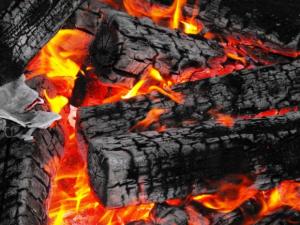
Firewood In Nigerian Kitchens
Cooking Smart, Saving More_ Firewood Does Both

Still, the health risks are real, and the environmental damage continues to mount. Experts argue that awareness campaigns, subsidies for cleaner fuels, and community-based forest management could help balance tradition with modern realities. But until such policies take deeper root, firewood will remain a familiar sight in both rural compounds and urban backyards.

Firewood in Nigerian Kitchens

In the end, the flames continue to glow. For some, firewood carries memory and tradition. For others, it remains the more affordable choice. And for many, it is simply the way they were raised. 

Gas may be quicker and charcoal less smoky, but in countless Nigerian homes, firewood still burns, not just as fuel, but as a link between the past and the present.

Share this:

  • Share on Facebook (Opens in new window) Facebook
  • Share on X (Opens in new window) X
  • Share on LinkedIn (Opens in new window) LinkedIn
  • Share on Pinterest (Opens in new window) Pinterest
  • Share on WhatsApp (Opens in new window) WhatsApp
  • Email a link to a friend (Opens in new window) Email
  • More
  • Share on Reddit (Opens in new window) Reddit
  • Print (Opens in new window) Print
  • Share on Tumblr (Opens in new window) Tumblr
  • Share on Telegram (Opens in new window) Telegram
Morganable Briefing Stay with the story beyond the headline.

Get Morganable’s independent reporting, analysis and data-backed insight on Nigeria, Africa and the wider world.

Join the Briefing
Editorial Trust How Morganable protects public-interest journalism.

Our reporting is guided by accuracy, independence, fairness, transparency, correction discipline and public-interest relevance.

Editorial Standards Corrections Ownership & Funding
Morganable articles are produced for readers who want reporting with context, analysis with discipline and journalism that treats public consequence seriously.

Like this:

Like Loading…

Related

Tags: charcoalCommunitiesHousehold
Alhassan Salihu

Alhassan Salihu

A young passionate journalist, that think global, striving to provide solutions to problems of the world

Recommended

New Orleans Attack: Biden, Trump React

New Orleans Attack: Biden, Trump React

2 years ago
NDC Paves Way For Peter Obi's Presidential Bid

NDC Paves Way For Peter Obi’s Presidential Bid

2 months ago

Popular News

  • 79% Of Nigerians Living In Poverty-World Bank

    79% Of Nigerians Living In Poverty-World Bank

    0 shares
    Share 0 Tweet 0
  • Nigerian Box Office Hits Records 8.8Billion in 2026

    0 shares
    Share 0 Tweet 0
  • PFIPC Scandal: Atiku, Presidency Clash Over Investigation

    0 shares
    Share 0 Tweet 0
  • INEC Recognises David Mark-Led ADC Faction

    0 shares
    Share 0 Tweet 0
  • Burna Boy Marks His 35th Birthday

    0 shares
    Share 0 Tweet 0

Follow me

Morganable News Logo

Morganable News Logo

Morganable News Logo

Morganable

Morganable Logo

Morganable

Independent Digital-First Newspaper

Morganable is an independent digital-first newspaper owned by Morganable Media Group, publishing journalism across news, business, entrepreneurship, spotlights, entertainment, sports, lifestyle and opinion for readers in Nigeria, Africa and the wider world.

Editorial Trust

  • Policy Hub
  • Editorial Standards
  • Publishing Principles
  • Ethics Policy
  • Corrections Policy
  • Actionable Feedback Policy

Transparency & Commercial

  • Ownership and Funding
  • Diversity Policy
  • Advertising Policy
  • Sponsored Content Policy
  • Diversity Staffing Report

Legal & Reader Rights

  • Terms of Use
  • Privacy Policy
  • Cookie Policy
  • Contact Us

© 2019–2026 Morganable. Owned by Morganable Media Group. Independent digital-first newspaper. All rights reserved.

Welcome Back!

Login to your account below

Forgotten Password? Sign Up

Create New Account!

Fill the forms bellow to register

All fields are required. Log In

Retrieve your password

Please enter your username or email address to reset your password.

Log In

Add New Playlist

Facebook
No Result
View All Result
  • Home
  • News
    • Security & Justice
    • Communities
    • Health
    • Education
    • World
  • Politics
    • Governance
    • Policy
    • Political Analysis
    • Elections
  • Africa
    • West Africa
    • East Africa
    • Southern Africa
    • North Africa
    • African Union
    • History & Civilisation
    • Africa Analysis
      • Africa’s Forgotten Human Rights Charter
  • Business
    • Markets
    • Industries
    • Currencies
    • Crypto & Digital Assets
    • Personal Finance
  • Technology
    • Fintech
    • Startups
    • Artificial Intelligence
    • Digital Economy
    • Telecoms
    • Cybersecurity
  • Agriculture
    • Food Security
    • Agribusiness
    • Farming
    • Supply Chains
    • Markets & Prices
    • Data Intelligence
  • Life & Culture
    • Fashion
    • Music
    • Film & TV
    • Arts & Culture
    • Books
    • Travel
    • Gaming
    • Health & Wellbeing
    • Food & Drink
    • Personal Development
  • Analysis
    • Explainers
    • Special Reports
    • Investigations
    • Briefings
    • Data Intelligence
  • Video
    • Interviews
    • Video Explainers
    • Video Briefings
    • Documentaries
  • Opinion
    • Executive Editor’s Desk
    • Op-Eds
    • Editorials
    • Columns
    • Letters
  • More
    • Sports
    • Features
    • Entrepreneurship
    • Morganable Hausa
    • Policy Hub
    • Editorial Team
    • About Morganable
    • Corrections Policy
    • Advertise With Us
    • Share Your Story
    • Contact Us
  • Login
  • Sign Up

© 2019–2026 Morganable. Owned by Morganable Media Group. Independent digital-first newspaper. All rights reserved.

Loading Comments...

    %d
      Verified by MonsterInsights